/dp/B08CMPY86M?tag=diagnosticsto-20
Check first: Match tester capability to battery type and CCA range.
Check availability on Amazon
Updated Sep 8, 2026Shortlist fit, limitations, and ownership terms reviewedHow we evaluate
Independent buying guide
Best Car Battery Tester
Small testers that help separate a weak battery from a charging or starting problem. This guide is built to help you choose by job, not by hype.
Quick decision
Choose a car battery tester by the result you need
For occasional 12V checks, prioritize clear battery, cranking, and charging results with the right battery-type settings. For 24V systems, printed reports, or repeated shop use, compare broader analyzers and clamp quality. A multimeter measures voltage well but does not replace a purpose-built battery health test.
Continue with the tester versus multimeter decision or the printed-report checklist.
Short answer: A battery tester is the right first tool when no-start symptoms, slow cranking, or charging doubts appear before a clear diagnostic code.
Battery-test support docs emphasize CCA, state of health, state of charge, voltage, internal resistance, cranking, and charging-system checks.
Buying checks that matter
- Battery type support
- CCA range
- Cranking test
- Charging or alternator test
Compatibility-first path
Choose the smallest suitable car battery testers path before opening a listing.
Buyer constraint: A battery tester is the right first tool when no-start symptoms, slow cranking, or charging doubts appear before a clear diagnostic code.
Limitation: Use the correct battery type and rated CCA, then separate battery health from cranking and charging-system results before replacing parts. A product can fit one job and still be the wrong purchase when the vehicle, material, adapter, app, update term, or confirmation method changes.
/dp/B0F2HZJPR2?tag=diagnosticsto-20
Check first: Printer/report features should not matter more than accurate clamps and clear testing modes.
Check availability on Amazon
/dp/B01M0ARG3X?tag=diagnosticsto-20
Check first: Budget testers need careful clamp contact and correct battery settings.
Check availability on Amazon
Models to compare first
| Product | Best fit | Check before buying | Profile |
|---|---|---|---|
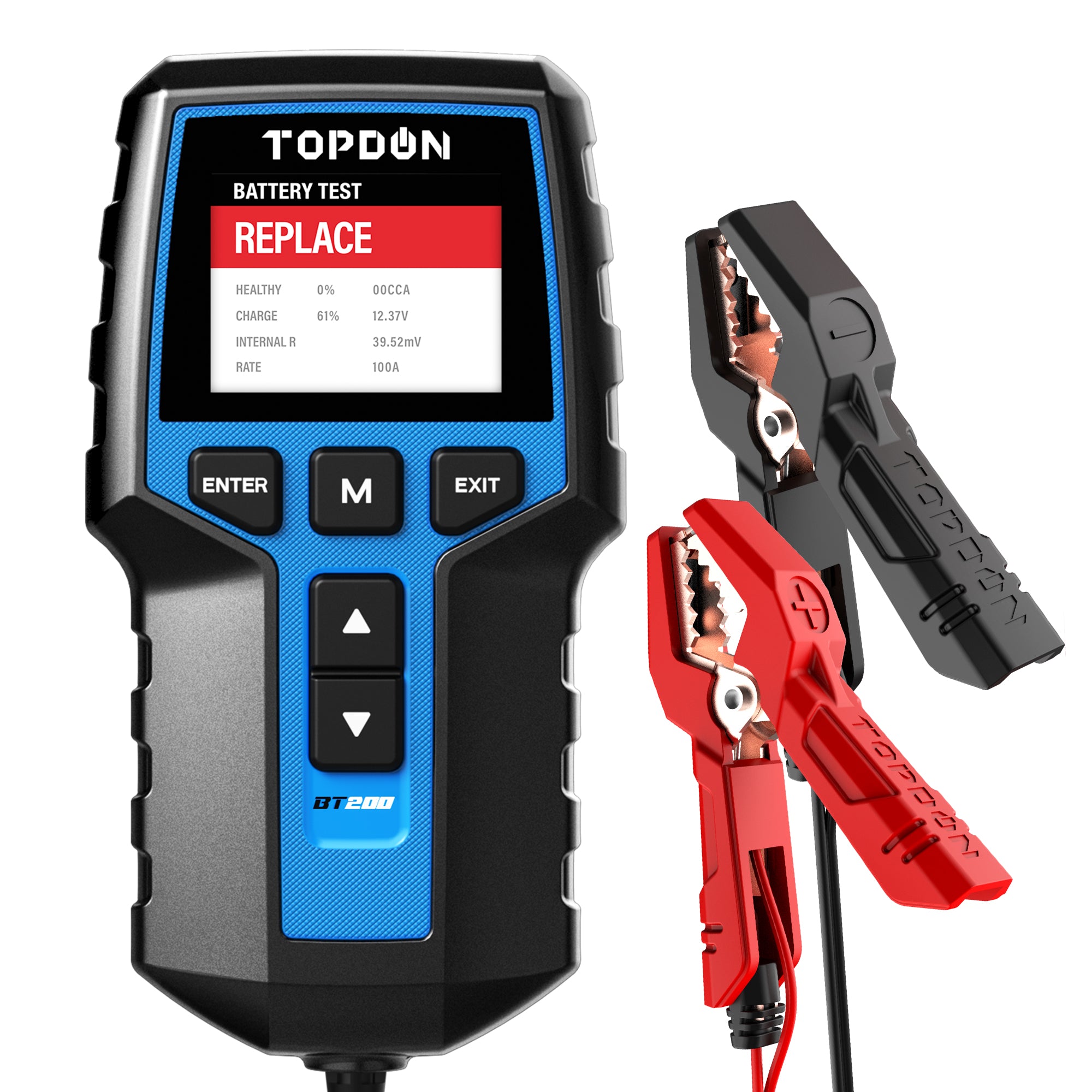
| TOPDON BT200 | Checking battery health, cranking performance, and charging basics. | Match tester capability to battery type and CCA range. | View profile |
| KONNWEI KW700 | Users who want a tester that can produce a record of battery condition. | Printer/report features should not matter more than accurate clamps and clear testing modes. | View profile |
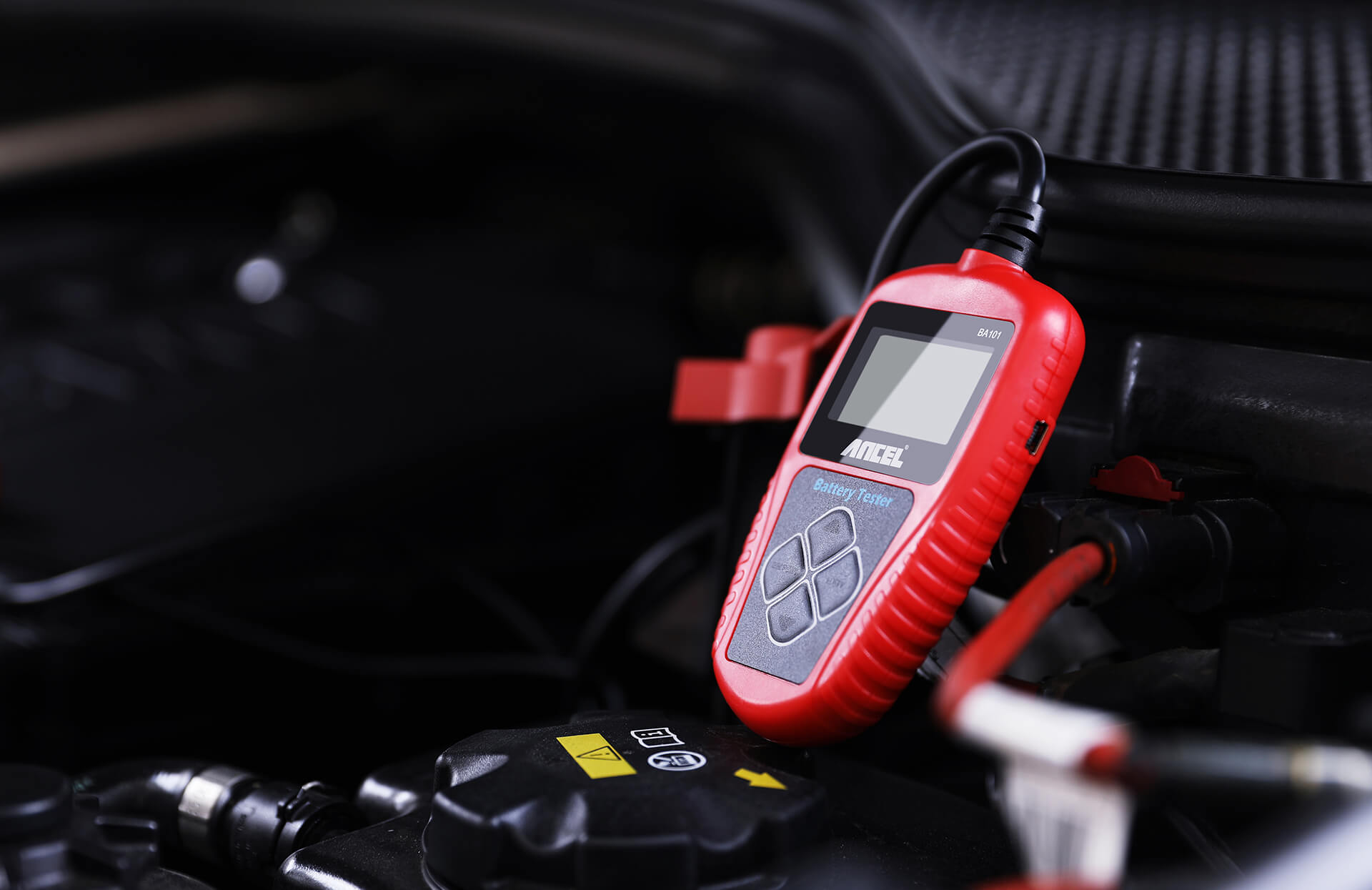
| ANCEL BA101 | Basic battery checks before replacing a battery or alternator. | Budget testers need careful clamp contact and correct battery settings. | View profile |
| TOPDON BT100 | Basic 12V battery, cranking, and charging checks. | For 24V or shop reporting needs, compare against BT200-class testers. | View profile |
| FOXWELL BT705 | Users who test both 12V and 24V batteries or want a sturdier analyzer. | Confirm supported chemistries and CCA range for larger batteries. | View profile |
Shortlist
Products in this guide
Car Battery Testers · $$
TOPDON BT200
A strong battery tester candidate for the first battery-testing roundup.
- Best for
- Checking battery health, cranking performance, and charging basics.
- Check first
- Match tester capability to battery type and CCA range.
Compare fit and alternatives in Best Car Battery Tester.

Car Battery Testers · $$
KONNWEI KW700
Good for comparison content around printed reports, CCA, and alternator tests.
- Best for
- Users who want a tester that can produce a record of battery condition.
- Check first
- Printer/report features should not matter more than accurate clamps and clear testing modes.
Compare fit and alternatives in Best Car Battery Tester.
Car Battery Testers · $
ANCEL BA101
A practical entry-level page candidate for no-start and battery health content.
- Best for
- Basic battery checks before replacing a battery or alternator.
- Check first
- Budget testers need careful clamp contact and correct battery settings.
Compare fit and alternatives in Best Car Battery Tester.

Car Battery Testers · $
TOPDON BT100
A strong entry battery tester with a clear buyer path from no-start guides.
- Best for
- Basic 12V battery, cranking, and charging checks.
- Check first
- For 24V or shop reporting needs, compare against BT200-class testers.
Compare fit and alternatives in Best Car Battery Tester.

Car Battery Testers · $$
FOXWELL BT705
A step-up battery tester candidate for home garages and light shop use.
- Best for
- Users who test both 12V and 24V batteries or want a sturdier analyzer.
- Check first
- Confirm supported chemistries and CCA range for larger batteries.
Compare fit and alternatives in Best Car Battery Tester.
Car Battery Testers · $
Clore SOLAR BA9
A sensible comparison product for budget battery tester roundups.
- Best for
- Compact battery checks without a large analyzer.
- Check first
- Small testers are best for quick decisions, not detailed fleet reports.
Compare fit and alternatives in Best Car Battery Tester.
Car Battery Testers · $
KONNWEI KW208
A budget alternative to ANCEL BA101 and TOPDON BT100.
- Best for
- Very low-cost battery health checks for occasional DIY use.
- Check first
- Expect budget build quality and verify settings before trusting a replacement decision.
Compare fit and alternatives in Best Car Battery Tester.
How to choose
Match the tool to the job first. A cheap tool can be perfect for a simple code check and frustrating for ABS, SRS, TPMS, battery registration, or active tests. A high-end tool can also disappoint if its coverage does not include your exact vehicle.
- Write down the vehicle year, make, model, engine, and system.
- Check whether updates are free, paid, or subscription-based.
- Verify the return policy before testing compatibility.
- Prefer clear limitations over vague feature claims.
How we evaluate the shortlist
We separate manufacturer-documented capability from editorial fit. Compatibility, measurement limits, included hardware, software terms, support clarity, and the safer alternative all matter before hands-on evidence is available.
Read the testing methodRelated guides
TOPDON BT100 vs ANCEL BA101: Basic Battery Tester Comparison
TOPDON BT100 and ANCEL BA101 fit basic DIY battery checks; compare battery-type support, CCA entry, cranking test, charging test, clamp quality, and display clarity.
Battery Load Test vs Conductance Test: Which Result Should You Trust?
Load tests stress the battery under demand, while conductance testers estimate battery health electronically; both are useful when interpreted with voltage, temperature, and symptoms.
AGM Battery Tester Checklist for Modern Vehicles
AGM batteries need a tester that supports the battery type, rating input, cranking behavior, and charging-system checks used on newer vehicles.
Professional Automotive Battery Testers: Shop Buyer Guide
A professional automotive battery tester earns its price through repeatable battery, cranking, and charging workflows, broad documented battery support, durable service hardware, and useful records.
Battery Testers That Print Reports: Buyer Guide
A battery tester that prints reports is useful when a shop, mobile technician, fleet, or seller needs portable proof; home users may get the same decision value from saved digital results.